Gas Pipe Sizing Calculator (LPG & PNG) | Formula, Example, Excel & CAD Download

📌 Introduction
Designing a safe and efficient gas pipeline system requires accurate gas pipe sizing calculation. Whether you are working on LPG or PNG systems, selecting the correct pipe diameter is critical to ensure proper gas flow, pressure stability, and safety.
In this guide, you will learn:
✔ Gas pipe sizing calculation formula
✔ LPG pipe size calculation method
✔ PNG gas pipeline design basics
✔ Step-by-step example
✔ Free Excel & CAD downloads
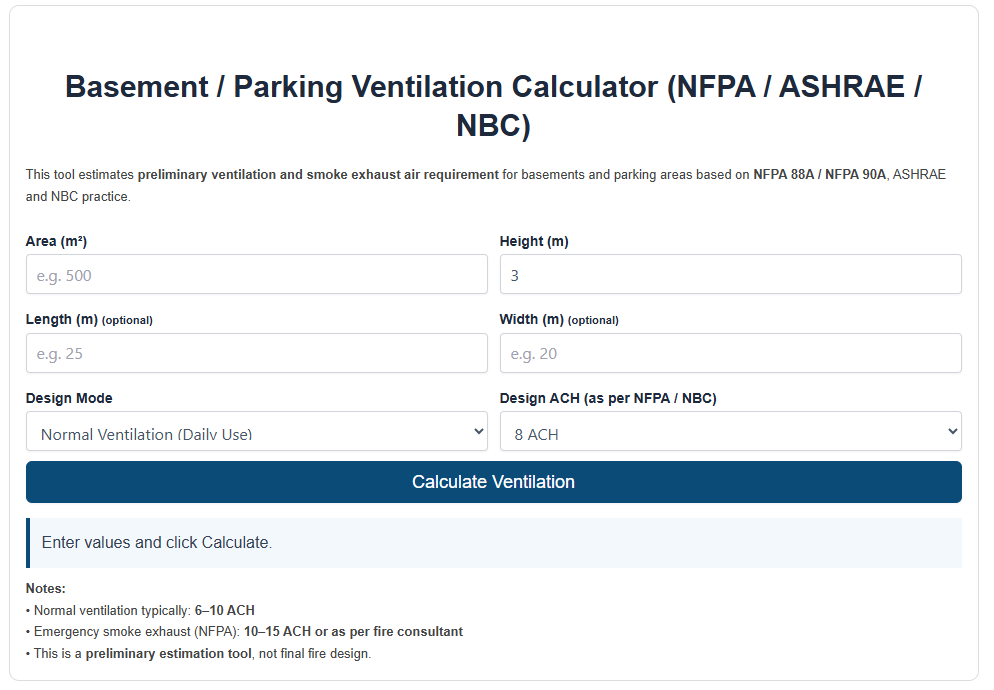
👉 Plus, you can use our Gas Pipe Sizing Calculator below for instant results.

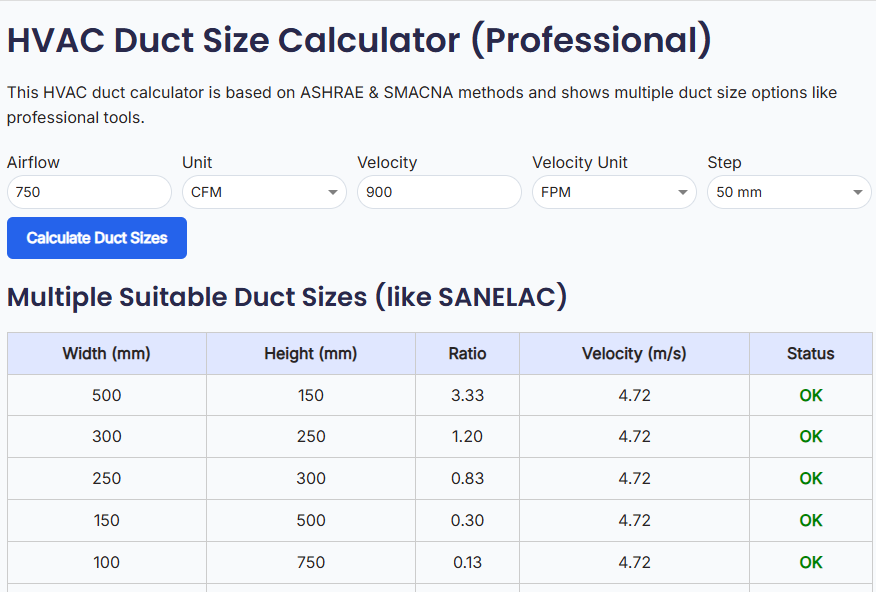
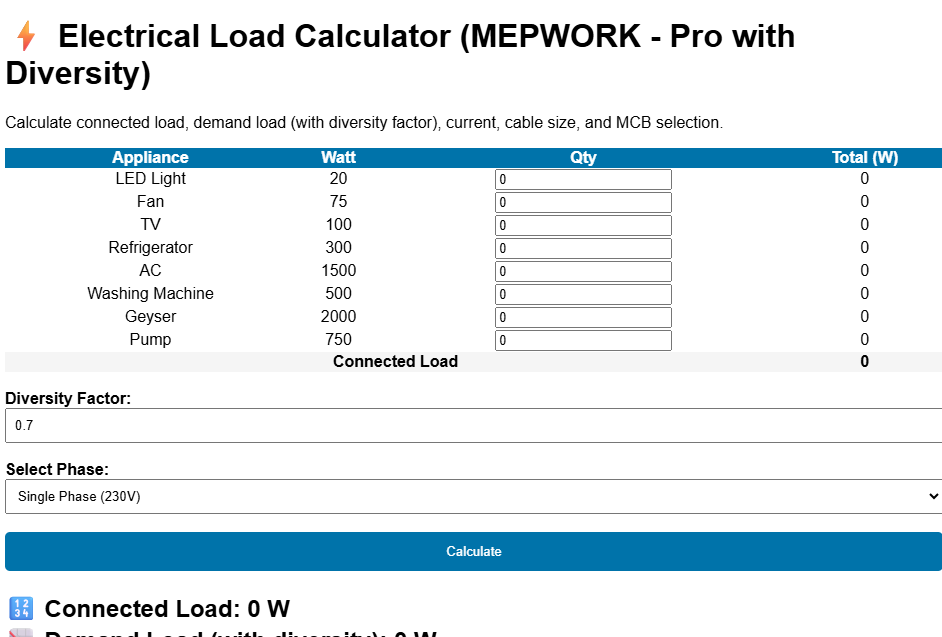
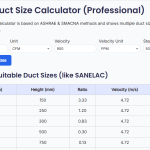
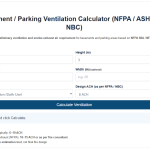
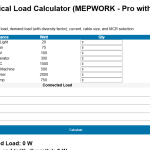
🧮 Gas Pipe Sizing Calculator (LPG & PNG)
👉 Use this tool to calculate required pipe size based on load and length:
🔥 Gas Pipe Sizing Calculator (LPG / PNG)
📊 What is Gas Pipe Sizing?
Gas pipe sizing is the process of determining the correct pipe diameter required to carry gas from source to appliances without excessive pressure drop.
Improper sizing can lead to:
❌ Low gas pressure
❌ Equipment malfunction
❌ Safety hazards
🔍 Gas Pipe Sizing Calculation Formula
📌 Step 1: Gas Flow Calculation
Gas Flow (m³/hr) = Load (kW) × Conversion Factor
Conversion Factors:
- LPG ≈ 0.08 m³/hr per kW
- PNG ≈ 0.10 m³/hr per kW
📌 Step 2: Pipe Diameter Calculation
D = √(4 × Flow / (π × Velocity))
Where:
- D = Diameter (m)
- Flow = Gas flow (m³/hr)
- Velocity = Gas velocity (typically 6–10 m/s)
📌 Step 3: Select Standard Pipe Size
Choose nearest higher standard pipe size:
| Calculated (mm) | Select Pipe |
|---|---|
| 18 mm | 20 mm |
| 26 mm | 32 mm |
| 38 mm | 40 mm |
| 52 mm | 65 mm |
📐 Example: Gas Pipe Size Calculation
Let’s calculate for a commercial kitchen:
Given:
- Load = 50 kW
- Gas = LPG
Step 1: Flow
Flow = 50 × 0.08 = 4.0 m³/hr
Step 2: Diameter
D = √(4 × 4 / (3.14 × 10))
D ≈ 0.071 m = 71 mm
Step 3: Final Pipe Size
👉 Select 80 mm pipe
🔥 LPG vs PNG Pipe Sizing Difference
| Parameter | LPG | PNG |
|---|---|---|
| Density | Higher | Lower |
| Flow Factor | 0.08 | 0.10 |
| Pressure | Medium | Low |
| Pipe Size | Smaller | Larger |
👉 PNG requires slightly larger pipe due to lower energy density.
🏗️ Gas Pipeline Design Considerations
📌 Important Design Factors:
✔ Pipe length
✔ Number of bends
✔ Pressure drop
✔ Gas velocity
✔ Future expansion
⚠️ Safety Guidelines (Very Important)
- Install gas leak detectors
- Provide proper ventilation
- Avoid low-level pipe routing for LPG
- Use approved materials (GI / Copper)
- Follow IS codes and NFPA guidelines
📥 Free Download (Excel + CAD)
👉 Add this section on your site:
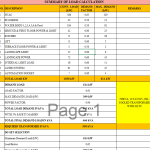
- Gas Pipe Sizing Excel Calculator
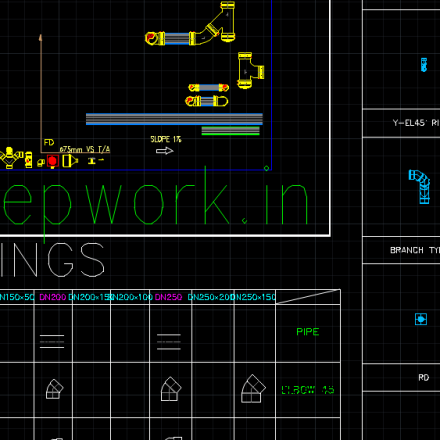
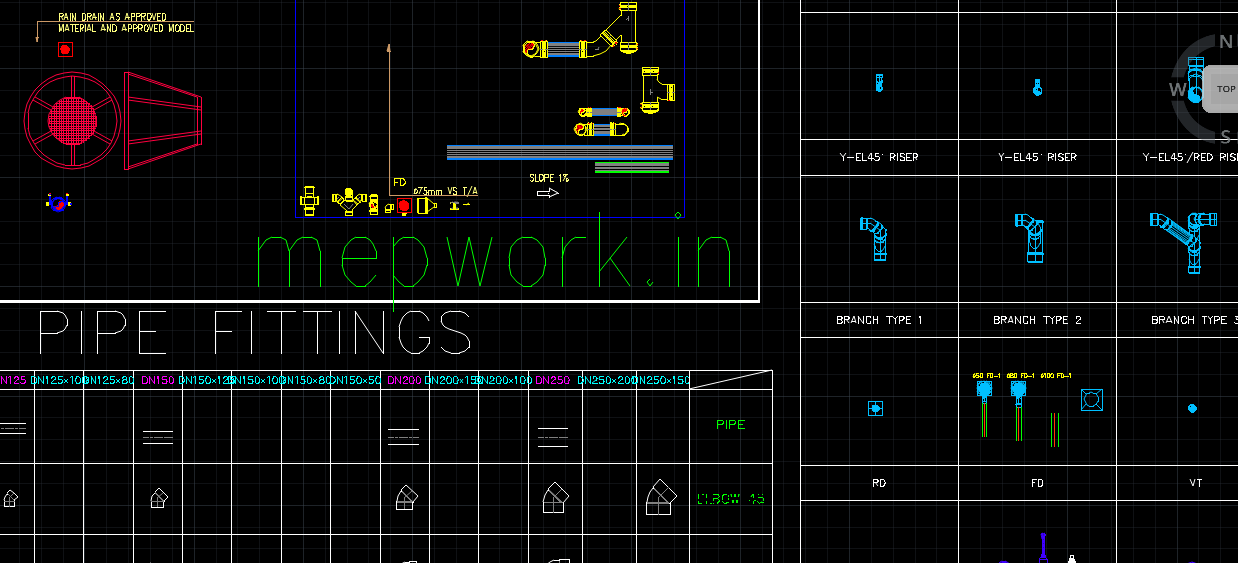
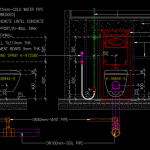
- LPG Pipeline CAD Drawing
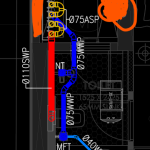
- PNG Gas Layout DWG
❓ FAQ (Schema Ready)
What is gas pipe sizing calculation?
It is the method to determine pipe diameter based on gas load and flow.
How to calculate LPG pipe size?
Use formula:
Flow = Load × 0.08
Then calculate diameter using velocity formula.
What is standard gas pipe velocity?
Typically 6–10 m/s for safe operation.
Which pipe is used for gas pipeline in India?
GI and copper pipes are commonly used.
Why is pipe sizing important?
Incorrect sizing can cause pressure drop and safety issues.
🎯 Conclusion
Accurate gas pipe sizing calculation is essential for efficient and safe gas system design. Whether you are working with LPG or PNG, using the correct formulas and tools ensures proper performance and compliance with standards.
👉 Use the calculator above to simplify your design process and avoid errors.
📢 Why Download from MEPWORK?
- Free DWG files
- Ready-to-use drawings
- Designed for engineers
- Updated as per industry standards
MEPWORK.IN is developed by an MEP engineering professional with hands-on experience in building services design and execution.
The platform is created to solve real-world engineering problems and provide practical tools for faster and more accurate project work.
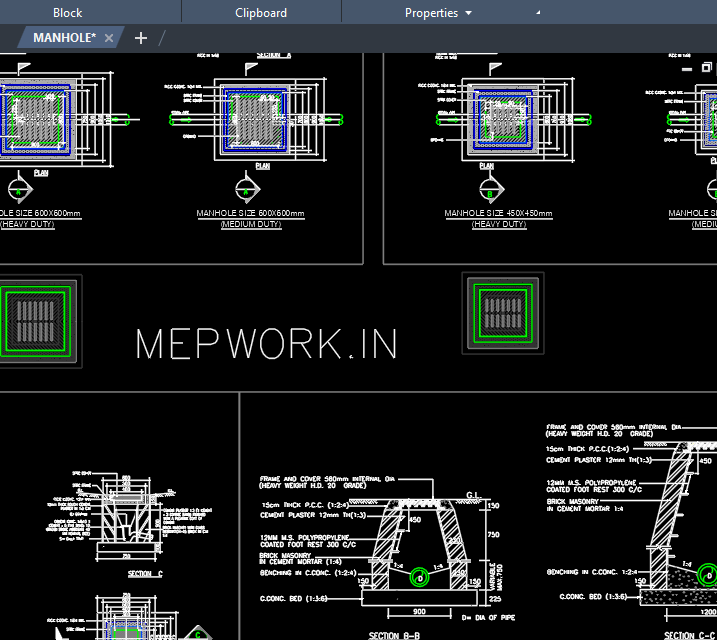
Download free AutoCAD DWG files for MEP engineers including plumbing, HVAC, fire alarm, and electrical systems.
All drawings are ready to use and based on industry standards.
All resources are regularly updated as per latest standards (NBC 2016, IS Codes, NFPA, and 2026 industry practices).