

EPABX System in Residential Buildings – Design, Wiring, Configuration & Installation Guide

An EPABX system (Electronic Private Automatic Branch Exchange) is a centralized telephone system used in residential buildings to enable internal communication between flats and external calling through limited trunk lines.
In modern apartments, EPABX systems are often integrated with intercom systems, security cabins, and gate communication, making them a key part of MEP electrical design.
In this guide, you will learn:
- What an EPABX system is
- Types of EPABX systems
- Design and wiring for residential buildings
- Installation and configuration basics
📐 What is an EPABX System?
An EPABX system is a private telephone exchange installed within a building that allows:
- Internal calling between extensions
- External calling via shared lines
- Call transfer, conferencing, and routing
👉 Example:
- Flat 101 can call Flat 203 using extension number
- Security can call any flat
- Limited external lines serve multiple users
🏢 Types of EPABX Systems
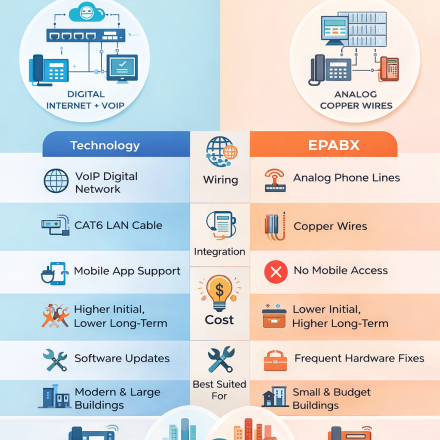
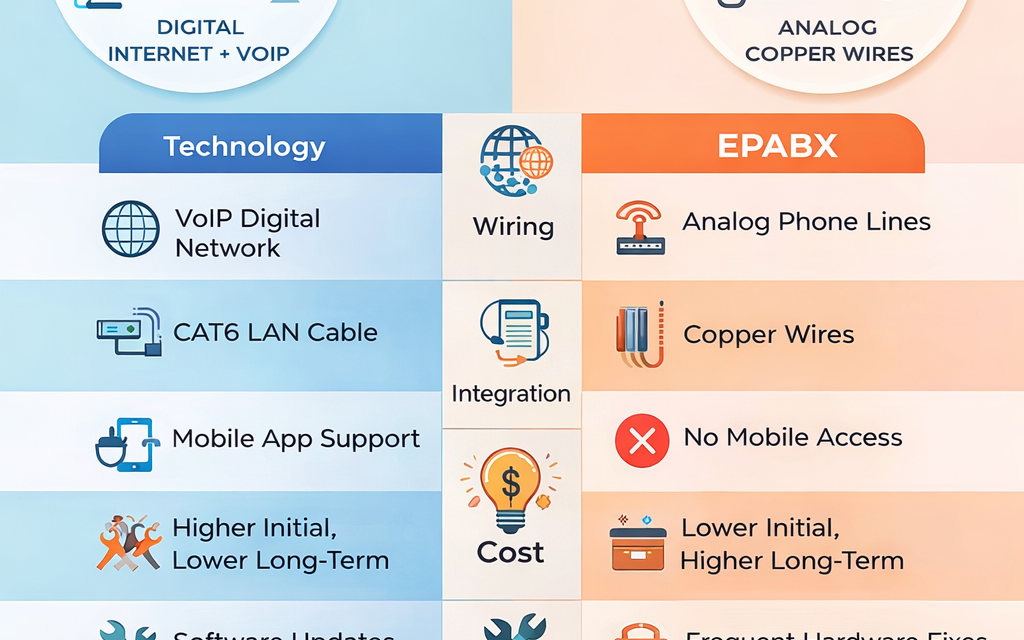
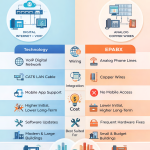
🔹 1. Analog EPABX System
- Uses traditional telephone lines
- Cost-effective
- Limited features
👉 Best for: Small residential buildings
🔹 2. Digital EPABX System
- Better call quality
- Advanced features
- Supports multiple extensions
👉 Best for: Medium apartments
🔹 3. IP PBX System
- Works on LAN/WiFi
- Supports mobile apps
- Scalable & smart
👉 Best for: Modern smart buildings
⚙️ EPABX System Design for Residential Building
🔹 Basic Components
- EPABX Main Unit (Control Panel)
- Extensions (Telephone Units)
- Trunk Lines (External Lines)
- Distribution Frame (MDF/IDF)
- Power Supply
🔹 System Layout
- EPABX panel installed in electrical/communication room
- Extension lines routed to each flat
- Security cabin connected as master station
🔌 EPABX Wiring Diagram (Basic Concept)
📌 Analog System:
- 2-core telephone cable
- Star or loop wiring
📌 Digital System:
- Multi-pair cables
- Structured cabling
📌 IP PBX:
- CAT6 cable
- Network switch + router
🧮 EPABX System Design Calculation (Example)
📊 Example: G+5 Building
- Total flats: 24
- Security + office: 2
- Total extensions: 26
👉 External lines required:
- 4 to 8 trunk lines
👉 EPABX selection:
- 32-port system (expandable)
💡 EPABX Numbering Plan (IMPORTANT)
Example:
- Flat 101 → Ext: 201
- Flat 102 → Ext: 202
- Security → Ext: 100
👉 Keep:
- Simple numbering
- Logical grouping
⚙️ Installation Guidelines
✅ 1. Location
- Install in dry, ventilated room
✅ 2. Cable Routing
- Avoid electrical interference
- Use separate conduits
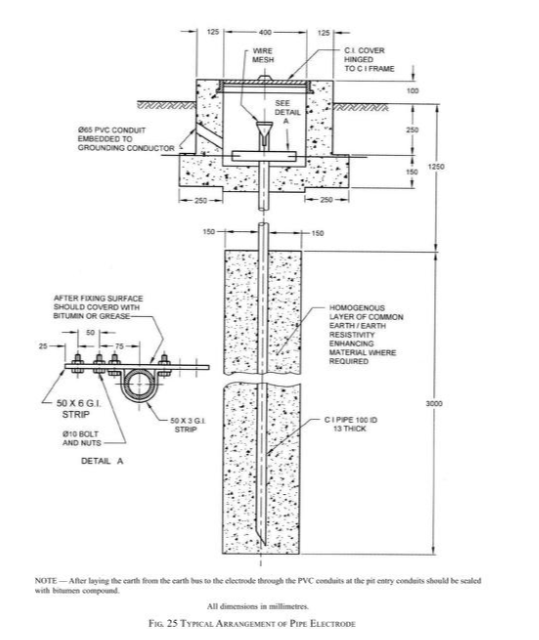
✅ 3. Earthing
- Proper grounding required
✅ 4. Power Backup
🏭 Top EPABX System Brands (India + International)
🔹 Leading Brands:
- Panasonic
- Matrix ComSec
- NEC Corporation
- Cisco
- Avaya
💡 Advantages of EPABX System
- Cost saving (shared lines)
- Internal communication
- Call management features
- Scalable system
📢 Why Download from MEPWORK?
- Free DWG files
- Ready-to-use drawings
- Designed for engineers
- Updated as per industry standards
MEPWORK.IN is developed by an MEP engineering professional with hands-on experience in building services design and execution.
The platform is created to solve real-world engineering problems and provide practical tools for faster and more accurate project work.
Download free AutoCAD DWG files for MEP engineers including plumbing, HVAC, fire alarm, and electrical systems.
All drawings are ready to use and based on industry standards.
All resources are regularly updated as per latest standards (NBC 2016, IS Codes, NFPA, and 2026 industry practices).