


















Electrical Load Calculation (Formula + Example + Excel Sheet)

Learn how to calculate electrical load for house using formula, example, and calculator. Includes appliance table and step-by-step guide.
What is Electrical Load Calculation?
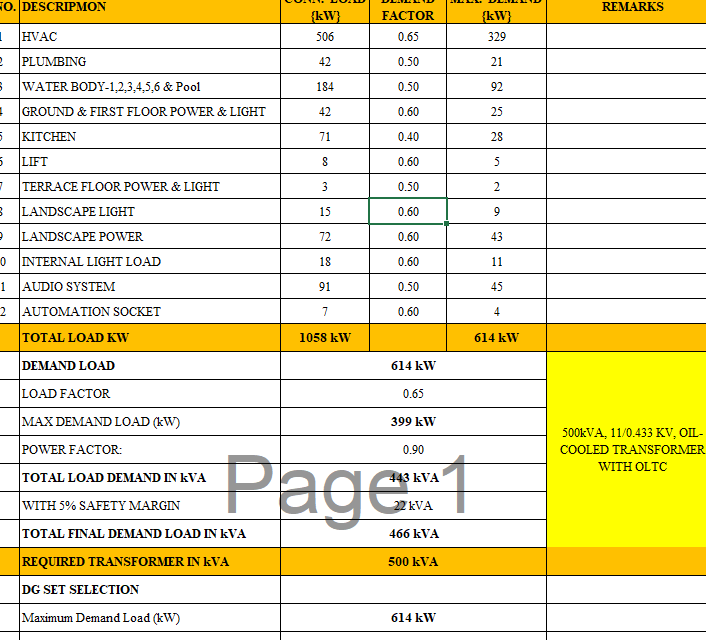
Electrical load calculation is the process of estimating the total electrical power demand of a building based on connected electrical appliances, lighting systems, HVAC equipment, and other electrical loads.
This calculation is essential for:
- Electrical panel sizing
- Transformer capacity selection
- Cable sizing
- Generator sizing
- Electrical safety and compliance
Proper electrical load calculation ensures that the electrical system operates safely and efficiently without overloading.
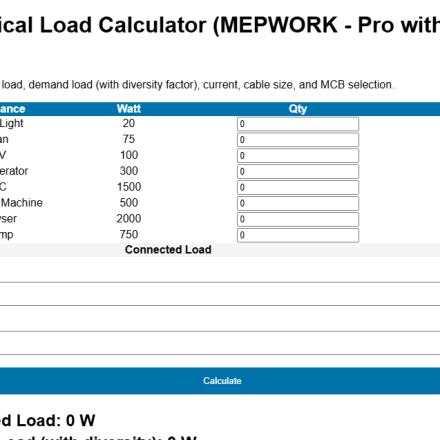
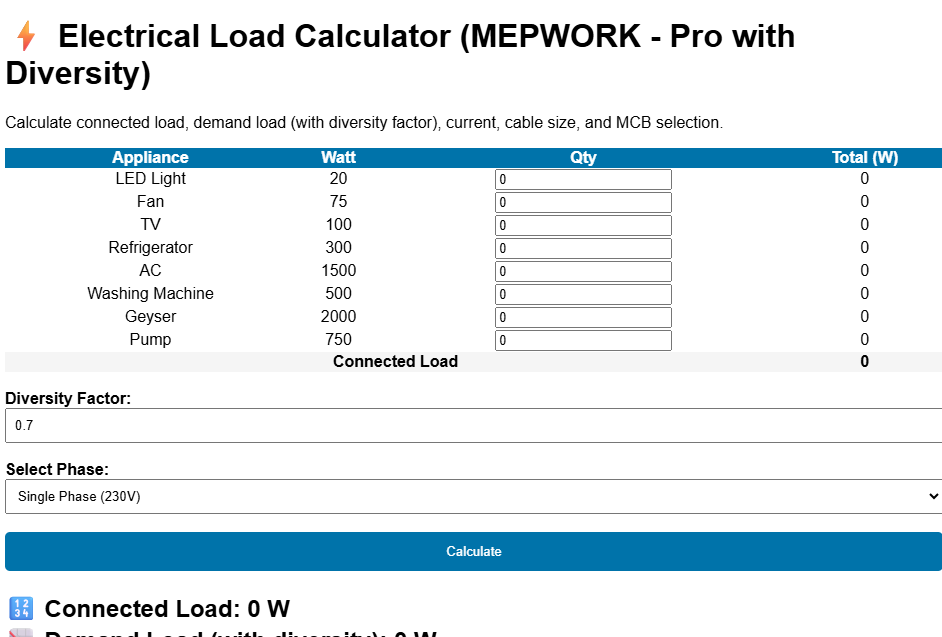
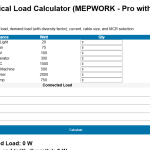
⚡ Electrical Load Calculator (MEPWORK – Pro with Diversity)
Calculate connected load, demand load (with diversity factor), current, cable size, and MCB selection.
| Appliance | Watt | Qty | Total (W) |
|---|---|---|---|
| LED Light | 20 | 0 | |
| Fan | 75 | 0 | |
| TV | 100 | 0 | |
| Refrigerator | 300 | 0 | |
| AC | 1500 | 0 | |
| Washing Machine | 500 | 0 | |
| Geyser | 2000 | 0 | |
| Pump | 750 | 0 | |
| Connected Load | 0 | ||
Why Electrical Load Calculation is Important
Electrical engineers perform load calculations to design safe electrical systems.
Key benefits include:
✔ Prevent electrical overload
✔ Proper cable sizing
✔ Accurate transformer selection
✔ Energy efficient system design
✔ Compliance with electrical standards
In India, electrical load calculations often follow guidelines from Bureau of Indian Standards and the National Building Code of India.
Basic Electrical Load Calculation Formula
The basic formula used in electrical load estimation is:
Electrical Load (kW) = Total Connected Load (W) / 1000
Another commonly used formula:
Current (A) = Power (W) / Voltage (V)
For three-phase systems:
Current (A) = Power (kW) × 1000 / (√3 × Voltage × Power Factor)
These formulas help determine electrical demand and system sizing.
Step-by-Step Electrical Load Calculation for a House
Step 1: List All Electrical Appliances
Example household appliances:
| Appliance | Quantity | Watt |
|---|---|---|
| LED Lights | 10 | 10 W |
| Fans | 5 | 75 W |
| Air Conditioner | 2 | 1500 W |
| Refrigerator | 1 | 300 W |
| TV | 1 | 120 W |
Step 2: Calculate Total Connected Load
Example:
Lighting = 10 × 10 = 100 W
Fans = 5 × 75 = 375 W
AC = 2 × 1500 = 3000 W
Refrigerator = 300 W
TV = 120 W
Total Load:
100 + 375 + 3000 + 300 + 120 = 3895 W
Step 3: Convert to kW
3895 / 1000 = 3.89 kW
So the total electrical load ≈ 4 kW
Residential Electrical Load Calculation Example
Typical electrical demand for a 2BHK house:
| Load Type | Estimated Load |
|---|---|
| Lighting | 0.5 kW |
| Fans | 0.5 kW |
| Kitchen Appliances | 1.5 kW |
| Air Conditioning | 3 kW |
| Miscellaneous | 1 kW |
Total estimated load:
6 – 7 kW
Electrical panels and wiring must be designed to support this load.
Electrical Load Calculator (Simple Formula)
You can calculate electrical load using this simple method:
Load (kW) = Number of Appliances × Watt / 1000
Example:
5 AC × 1500 W = 7500 W
Load = 7.5 kW
This method helps engineers estimate demand quickly.
Electrical Load Calculation for Commercial Buildings
Commercial buildings require larger electrical loads due to:
- HVAC systems
- Elevators
- Lighting systems
- Office equipment
Typical load estimates:
| Building Type | Load per Sqm |
|---|---|
| Residential | 25–40 W |
| Office | 50–70 W |
| Hospital | 80–120 W |
| Shopping Mall | 100–150 W |
Factors Affecting Electrical Load
Several factors influence electrical demand.
Number of Electrical Devices
More appliances increase total load.
Demand Factor
Not all devices operate simultaneously.
Diversity Factor
Different systems operate at different times.
Power Factor
Low power factor increases current demand.
Electrical Load Calculation Codes and Standards
Electrical load estimation should follow recognized engineering standards.
Important standards include:
- Bureau of Indian Standards
- National Building Code of India
- National Fire Protection Association
- International Electrotechnical Commission
These codes ensure electrical safety and design reliability.
Common Mistakes in Electrical Load Calculation
Engineers sometimes make mistakes during load estimation.
Common errors include:
❌ Ignoring future load expansion
❌ Incorrect diversity factor
❌ Underestimating HVAC loads
❌ Improper demand factor usage
Proper planning prevents electrical system failure.
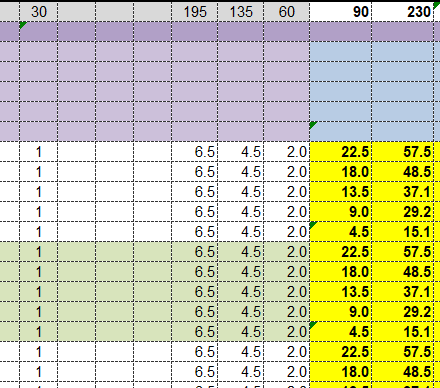
Download Electrical Load Calculator (Free Excel Tool)
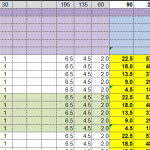
For faster calculations, engineers often use Excel-based electrical load calculators.
These tools automatically calculate:
- Total connected load
- Electrical demand
- Current calculation
- Panel sizing

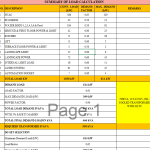
⚡Electrical Load Calculation Excel Free Download 228.50 KB 297 downloads
🔌 Introduction Electrical load calculation is one of the most important steps...Conclusion
Electrical load calculation is a fundamental step in electrical system design for residential, commercial, and industrial buildings. Accurate load estimation helps engineers select the correct cables, panels, transformers, and generators.
By following standard formulas and engineering guidelines, electrical systems can be designed to operate safely and efficiently.
Using electrical load calculators and engineering tools can further simplify the design process and improve accuracy.
FAQ
How do you calculate electrical load for a house?
Electrical load is calculated by adding the wattage of all electrical appliances and dividing the total by 1000 to convert watts to kilowatts.
What is the formula for electrical load?
Electrical load can be calculated using:
Load (kW) = Total Wattage / 1000
What is typical residential electrical load?
A typical residential house has an electrical load between 3 kW and 10 kW, depending on appliances and air-conditioning systems.
Why is electrical load calculation important?
Electrical load calculation ensures proper cable sizing, transformer selection, and safe electrical system operation.
📢 Why Download from MEPWORK?
- Free DWG files
- Ready-to-use drawings
- Designed for engineers
- Updated as per industry standards
MEPWORK.IN is developed by an MEP engineering professional with hands-on experience in building services design and execution.
The platform is created to solve real-world engineering problems and provide practical tools for faster and more accurate project work.
Download free AutoCAD DWG files for MEP engineers including plumbing, HVAC, fire alarm, and electrical systems.
All drawings are ready to use and based on industry standards.
All resources are regularly updated as per latest standards (NBC 2016, IS Codes, NFPA, and 2026 industry practices).