










Fire Pump calculation– Fire Fighting Pump Capacity Calculation (NFPA & NBC 2016)

Fire Pump Calculator
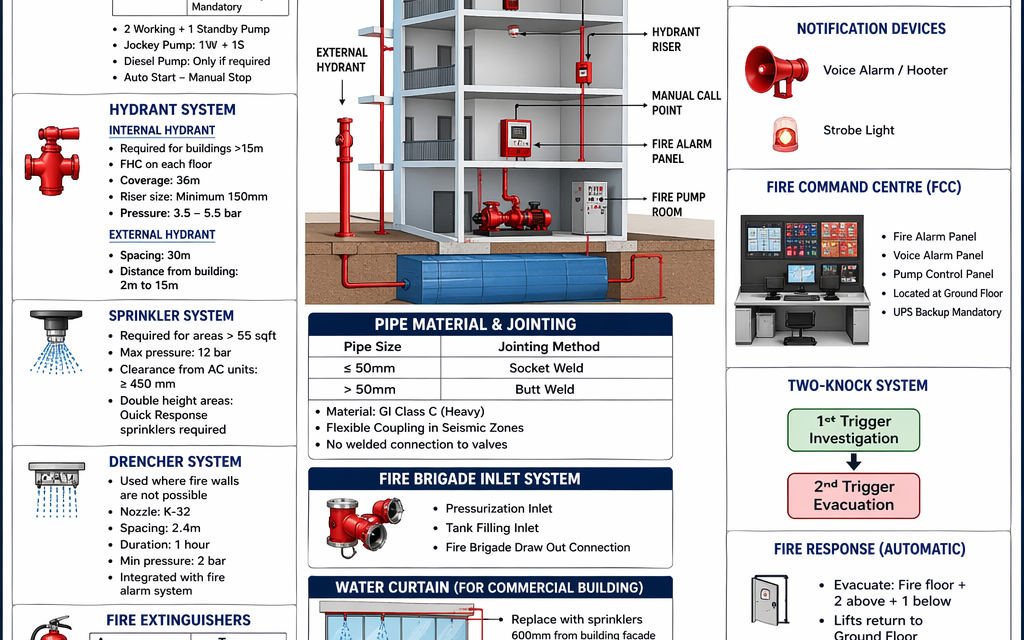
A fire pump calculator helps engineers determine the required pump capacity (flow rate and head) for fire protection systems such as fire hydrants, sprinkler systems, and fire hose reels.
Correct fire pump sizing ensures that the fire protection system provides adequate pressure and water flow during emergencies.
Fire pumps are commonly installed in:
- Fire hydrant systems
- Automatic sprinkler systems
- Fire hose reel systems
- High-rise building fire protection systems
Proper calculation is essential to comply with fire safety standards such as NFPA, NBC 2016, and IS fire protection codes.
Fire Pump Capacity Formula
The basic formula used in fire pump calculation is:
Q = Number of Hydrants × Flow per Hydrant
Where:
| Symbol | Description |
|---|---|
| Q | Pump capacity |
| Flow per Hydrant | Water discharge requirement |
Typical hydrant flow requirement:
900 – 1000 LPM per hydrant
Fire Pump Head Calculation
Total fire pump head is calculated using:
Total Head = Static Head + Friction Loss + Residual Pressure
Where:
| Component | Description |
|---|---|
| Static Head | Height difference between pump and highest outlet |
| Friction Loss | Pressure loss in pipes and fittings |
| Residual Pressure | Required pressure at hydrant outlet |
Typical residual pressure:
3.5 – 7 bar
Example Fire Pump Calculation
Assume:
- Number of hydrants operating simultaneously = 2
- Flow per hydrant = 900 LPM
Step 1 – Calculate flow rate
Q = 2 × 900
Q = 1800 LPM
Step 2 – Convert to m³/hr
1800 LPM = 108 m³/hr
Step 3 – Estimate pump head
Example:
| Parameter | Value |
|---|---|
| Static head | 30 m |
| Friction loss | 10 m |
| Residual pressure | 35 m |
Total Head = 30 + 10 + 35
Total Head = 75 m
Recommended fire pump:
Flow = 1800 LPM
Head = 75 m
Fire Pump Requirements According to Standards
NFPA Standards
National Fire Protection Association publishes NFPA 20 – Standard for the Installation of Stationary Fire Pumps.
Important requirements:
- Fire pumps must maintain required pressure during operation
- Minimum pressure must be maintained at the hydrant outlet
- Pump capacity must meet sprinkler or hydrant demand
NBC 2016 (India)
National Building Code of India 2016 provides guidelines for fire protection systems in buildings.
NBC recommendations:
| System | Pump Capacity |
|---|---|
| Hydrant system | 2280 LPM |
| Sprinkler system | 900–1800 LPM |
IS Fire Fighting Codes
Important Indian standards:
- IS 15105
- IS 3844
- IS 13039
These standards specify:
- pump capacity
- pipe sizing
- hydrant spacing
- system pressure
British Standards
British fire protection design often follows:
- BS 5306
This standard covers:
- fire hose reels
- hydrant systems
- water supply requirements
Typical Fire Pump Sizes
| System Type | Pump Capacity |
|---|---|
| Small building | 900 LPM |
| Medium building | 1800 LPM |
| Large building | 2850 LPM |
Electric or diesel fire pumps are commonly used depending on building type.
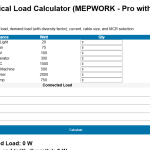
Fire Pump Calculator (Online Tool)
Using a fire pump calculator, engineers can instantly determine:
- required pump capacity
- total pump head
- hydrant system demand
- sprinkler flow requirements
This simplifies fire protection system design.
Download Fire Pump Calculation Excel Sheet
You can also download the Fire Pump Calculation Excel Tool for engineering design.
Download Fire Pump Calculation Excel Sheet
FAQ
How do you calculate fire pump capacity?
Fire pump capacity is calculated based on the number of hydrants or sprinklers operating simultaneously and the required flow per outlet.
How do you calculate pump capacity for fire hydrant system?
Pump capacity is determined using:
Pump Flow = Number of Hydrants × Flow per Hydrant
Typical hydrant flow is 900–1000 LPM.
What is the minimum pressure required for fire hydrants?
Most fire safety standards require 3.5 to 7 bar residual pressure at the hydrant outlet.
📢 Why Download from MEPWORK?
- Free DWG files
- Ready-to-use drawings
- Designed for engineers
- Updated as per industry standards
MEPWORK.IN is developed by an MEP engineering professional with hands-on experience in building services design and execution.
The platform is created to solve real-world engineering problems and provide practical tools for faster and more accurate project work.
Download free AutoCAD DWG files for MEP engineers including plumbing, HVAC, fire alarm, and electrical systems.
All drawings are ready to use and based on industry standards.
All resources are regularly updated as per latest standards (NBC 2016, IS Codes, NFPA, and 2026 industry practices).